Vitamin K2: The Complete Guide
There is a nutrient that almost nobody is getting enough of, that most doctors never test for, and that doesn’t get nearly the attention it deserves.
It’s not calcium. It’s not Vitamin D. It’s the nutrient that sits between them, the one that determines whether all that calcium you’re consuming and absorbing actually ends up in your bones, or ends up somewhere far more dangerous.
It’s called Vitamin K2. And it is, quite literally, the traffic controller for calcium in your body.
Most people have heard of Vitamin K in the context of blood clotting, but that’s a different form altogether.
Vitamin K2 is something most people have never been told about, and yet without it, calcium supplementation can actively increase cardiovascular risk, bone loss continues despite adequate calcium intake, and Vitamin D supplementation may produce disappointing results.
The research on K2 is compelling, the safety is excellent, and the cost of supplementation is low. This is why Vitamin K2 is slowly getting more attention.
This article covers everything you need to know: what K2 actually does in the body, the difference between K1 and K2, the research on heart health, bones, metabolism and brain function, the best food sources, who needs it most, how to dose it correctly, and how to test your levels if you want to know where you actually stand.
Key Takeaways
- Vitamin K2 is not the same as Vitamin K1. K1 is for blood clotting. K2 is for directing calcium into bones, and away from arteries. Having enough of one tells you nothing about the other.
- Without K2, calcium has no guidance system. It can circulate and deposit in artery walls and soft tissue rather than bone, which is one of the key mechanisms behind both osteoporosis and cardiovascular disease.
- K2 is the missing link in the Vitamin D conversation. Taking high-dose Vitamin D without K2 increases calcium absorption without activating the proteins needed to direct it safely, a combination that can increase cardiovascular risk.
- The form of K2 matters significantly. MK-7 is best for cardiovascular and bone support; MK-4 is the form the brain concentrates. For comprehensive coverage, both are worth considering.
- Standard blood tests don’t measure K2. You can be significantly deficient without any marker on a routine panel showing it, and there is a specific functional test that directly assesses whether your K2 status is adequate to protect your arteries.
K1 and K2: Not the Same Vitamin
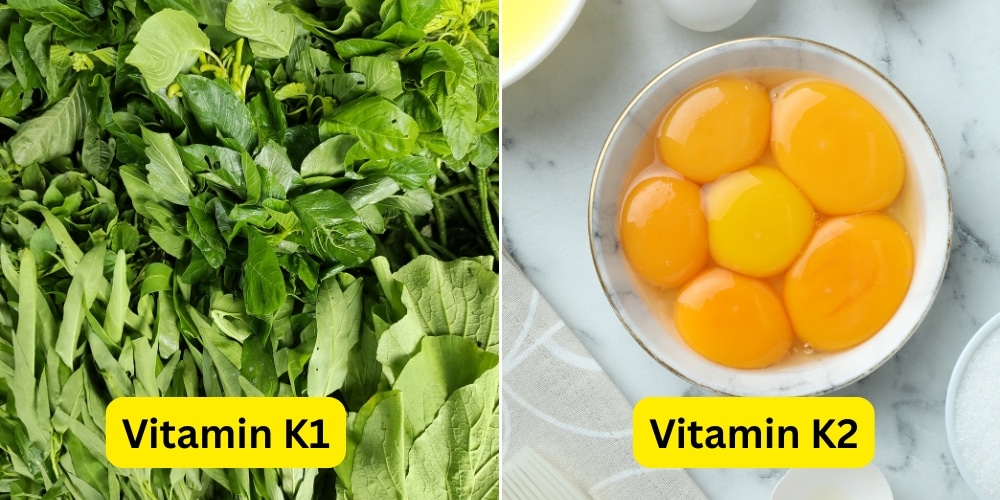
Most people assume Vitamin K is a single nutrient. It isn’t. K1 and K2 are chemically related but perform fundamentally different jobs, and having enough of one tells you absolutely nothing about the other.
Vitamin K1
Vitamin K1 (phylloquinone) is found in leafy green vegetables — kale, spinach, broccoli, parsley. Its primary job is blood clotting. It activates the proteins in your liver that control whether your blood clots properly.
This is why patients on warfarin (blood thinners) are told to be careful with their green vegetable intake; warfarin works by blocking K1’s activity.
Most people who eat vegetables get reasonable K1, and severe deficiency causing bleeding problems is uncommon in otherwise healthy adults.
Vitamin K2
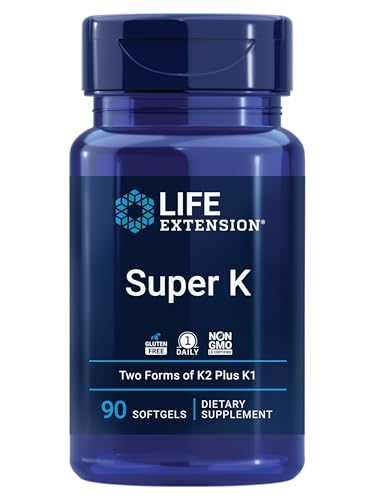
Vitamin K2 (the menaquinones) is a different story entirely. K2 doesn’t live in green vegetables. It lives in fermented foods and animal products — natto, aged fermented cheeses, grass-fed butter, egg yolks, liver.
And K2’s primary job has almost nothing to do with blood clotting. K2’s job is to activate the proteins that manage where calcium goes in your body, directing it into bone and teeth, and actively preventing it from depositing in arteries and soft tissue.
Standard blood tests don’t measure K2 at all. And a patient can have perfectly normal K1 levels while being significantly deficient in K2.
How K2 Works: The Two Proteins You Need to Know
To understand why K2 matters, you need to understand two proteins it activates. Here’s how they work in plain language.
Osteocalcin — The Bone Anchor
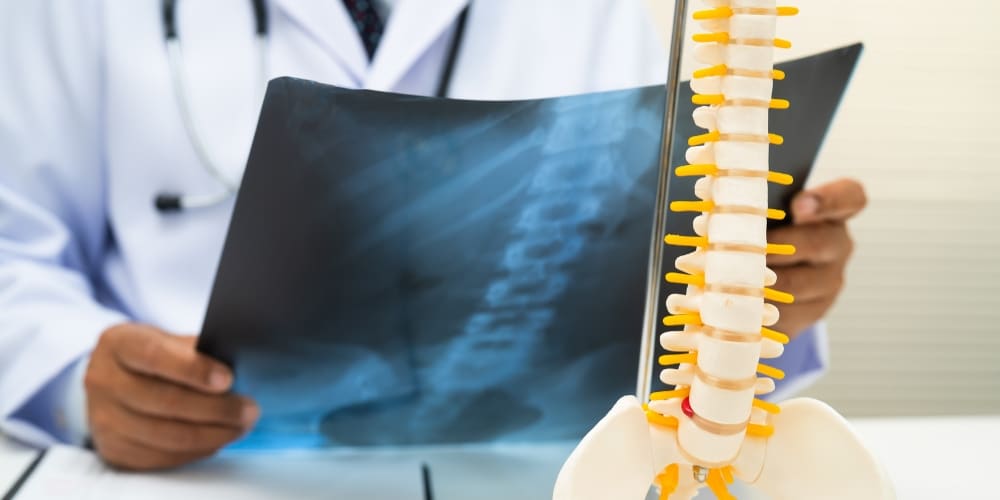
Osteocalcin is a protein produced by your bone-building cells. Its job is to capture calcium from the bloodstream and bind it into bone tissue – think of it as a net that catches calcium and locks it into the skeleton.
Here’s the critical part: osteocalcin only works when it has been activated by K2. Without K2, osteocalcin is inert. The net has holes in it. Calcium keeps circulating instead of anchoring into bone.
This is one of the central reasons why calcium supplementation, or even a calcium-rich diet doesn’t automatically translate into strong bones. If K2 is deficient, the bone anchor stays switched off.
Matrix GLA Protein — The Arterial Guard

The second protein is called Matrix GLA Protein (MGP). It functions as a guard for your artery walls against calcium deposits.
The smooth muscle cells lining your arteries produce this protein, and when it’s activated by K2, it creates a chemical barrier that prevents calcium from crystallising and depositing in artery walls. When it’s not activated, that barrier is down and calcium can accumulate freely.
Arterial calcification, hardening of the arteries was once thought to be an inevitable part of aging. We now know it’s an actively regulated process, and Matrix GLA Protein is one of the primary regulators. K2 is what keeps it switched on.
K2 and Bone Health: The Missing Piece
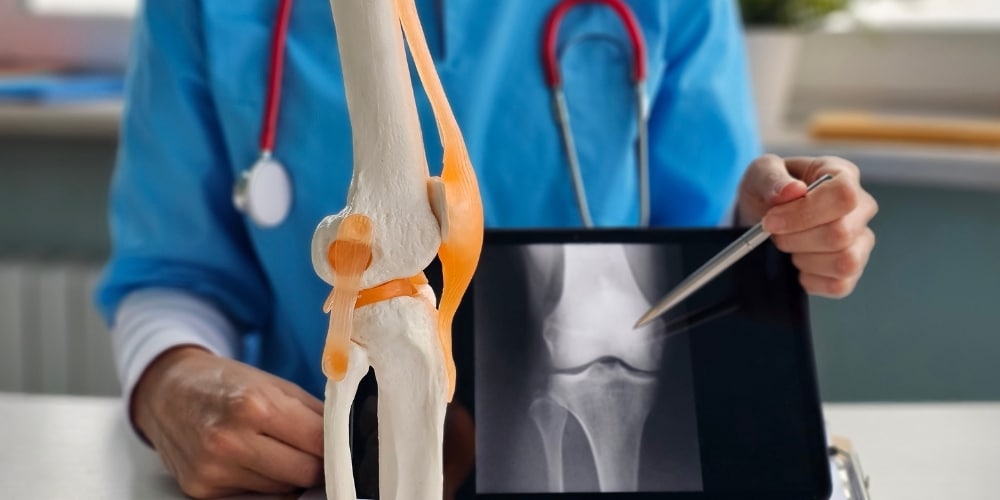
You can take all the calcium you want. You can have adequate Vitamin D so the calcium absorbs properly from your gut. But if K2 is low, osteocalcin stays inactive.
The calcium has nowhere to bind in bone. It circulates, and a significant amount ends up depositing in soft tissue rather than the skeleton. This is the calcium paradox — and K2 deficiency is a core part of the explanation.
The research on K2 and bone density is genuinely strong. In Japan, a high-dose MK-4 form of K2 is actually prescribed as a pharmaceutical drug for osteoporosis, and multiple randomised trials show it significantly reduces fracture risk.
Western research on MK-7 at supplemental doses also consistently shows improvements in bone mineral density markers, including a three-year randomised trial showing significant reductions in bone loss in postmenopausal women.
The important clinical takeaway is that calcium, Vitamin D, and K2 are a genuine trio, each one is less effective without the others.
Some of the disappointing results from calcium supplementation trials are almost certainly explained, at least in part, by uncontrolled K2 status in the participants. If K2 is deficient, calcium has no functioning guidance system.
K2 and Cardiovascular Health: What the Research Shows
This is arguably the most important application of K2 research, and the evidence is strong enough to take seriously.
The Rotterdam Study
In 2004, a large Dutch study called the Rotterdam Study followed nearly 4,800 participants for 10 years. Those with the highest intake of K2, specifically the MK-7 form — had a 57% lower risk of dying from cardiovascular disease compared to those with the lowest intake. They also had 52% less severe aortic calcification, hardening of the main artery leaving the heart.
Critically, K1, the form found in leafy greens showed no meaningful cardiovascular benefit. Only K2 did.
The Arterial Stiffness Trial
A well-designed randomised controlled trial gave women 180 micrograms of MK-7 per day for three years, compared to a placebo. The group taking K2 showed a significant reduction in arterial stiffness, measured by pulse wave velocity, the objective measure of how rigid arteries are.
Stiffer arteries mean more cardiac workload, higher blood pressure, and greater risk. This trial demonstrated that K2 directly improves arterial elasticity over time.
What both studies confirm, mechanistically, is what was described above: when Matrix GLA Protein is inactive because K2 is insufficient, calcium can deposit freely in arterial walls. K2 is what keeps that protection in place.
For anyone with a family history of cardiovascular disease, known arterial calcification, or existing heart disease, K2 addresses a specific mechanism that conventional cardiology largely doesn’t touch and the evidence for it is real.
K2 and Vitamin D: Why You Need Both
This is one of the most practically important messages in this entire article, and it’s rarely mentioned when Vitamin D supplementation is discussed.
Vitamin D significantly increases the amount of calcium your gut absorbs. It also increases the production of both osteocalcin and Matrix GLA Protein; the bone anchor and the arterial guard. Both of those proteins require K2 to become active.
Here’s what can happen when K2 is low: you take Vitamin D, your body absorbs more calcium and produces more of both proteins, but without K2, both proteins remain inactive. The newly absorbed calcium has no guidance system. It can end up circulating and potentially depositing in soft tissue and arterial walls.
This is one reason why some large-scale Vitamin D supplementation trials have produced disappointing cardiovascular outcomes. K2 status of participants was not accounted for.
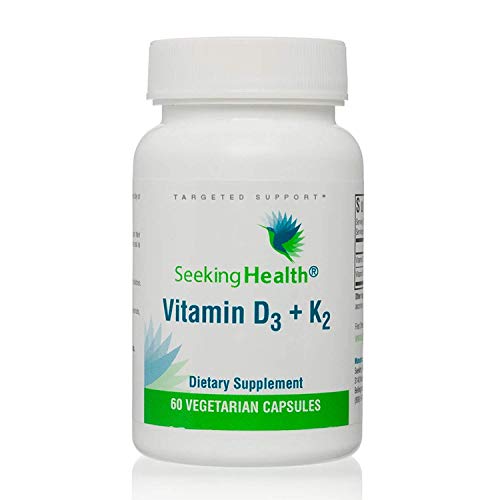
The practical message is clear: if you are taking Vitamin D, especially at doses above 2,000 IU daily — K2 should be part of the same conversation. Many quality Vitamin D supplements now combine D3 with K2 for exactly this reason.
There’s also a third partner in this system: magnesium. Vitamin D requires magnesium to be converted into its active form. A meaningful nutritional foundation, then, is Vitamin D3, K2, and magnesium, each one supporting the others.
K2 and Metabolic Health: The Blood Sugar Connection

This is an area of research that has developed significantly over the last 15 years, and it reveals a role for K2 that goes well beyond bones and arteries.
It turns out that osteocalcin, the bone anchor protein doesn’t just work in bone. When it’s fully activated by K2, it also travels to other organs and acts almost like a hormone.
Specifically, activated osteocalcin stimulates the pancreas to produce more insulin and increases the sensitivity of cells to insulin, meaning it helps the body use insulin more effectively.
In animal studies, when osteocalcin function is removed entirely, the animals develop something closely resembling type 2 diabetes: elevated blood sugar, insulin resistance, and increased body fat.
Restoring osteocalcin function reverses these changes. In human observational data, low activated osteocalcin which reflects low K2 is consistently associated with higher blood sugar, higher HbA1c, and markers of metabolic syndrome.
For people with PCOS — polycystic ovary syndrome this is particularly relevant. PCOS is fundamentally driven by insulin resistance, and K2 status tends to be lower in women with PCOS.
The human clinical trial data on K2 and blood sugar is promising but not yet as robust as the cardiovascular evidence. But the mechanism is solid, and given how safe K2 is, it’s a reasonable consideration for anyone managing metabolic syndrome or insulin resistance alongside other strategies.
K2 and Brain Health: The MK-4 Connection

The brain health research around K2 is still quite new but it does look promising.
MK-4 — the short-chain form of K2 is uniquely concentrated in brain tissue, particularly in the myelin sheaths that insulate nerve fibres. MK-7 doesn’t penetrate the central nervous system well. MK-4 does.
MK-4 is involved in the production of sphingolipids, a key structural component of the myelin sheath. Low MK-4 may impair myelin integrity, which is relevant not just for brain function but potentially for peripheral nerve health.
There’s also a K2-dependent protein called Gas6 with neuroprotective effects in the brain involved in the kind of healthy cellular maintenance that may be relevant to neurodegeneration — as reviewed by Ferland (2012). Several observational studies link lower K2 status with higher risk of cognitive decline in older adults.
To be clear: the brain health evidence for K2 is interesting and mechanistically plausible, but it is not at the same level as the cardiovascular and bone evidence. It wouldn’t be the primary reason to start K2.
But if you’re already taking it for cardiovascular and bone support, the potential neurological benefits are a worthwhile bonus and a reason to ensure MK-4 is included in the formula you choose.
The Weston Price Story: Why This Isn’t New
K2 isn’t really a new discovery — it’s a rediscovery. And understanding this history helps explain why deficiency is so common in modern diets.
In the 1930s, a Canadian dentist named Dr Weston A. Price spent a decade travelling the world studying traditional populations who had no access to modern dentistry, no fluoride, no dental care, yet had virtually no tooth decay and excellent jaw development.
He identified a fat-soluble compound in their diets found in grass-fed dairy, organ meats, and fermented foods that he believed was responsible. He called it Activator X, because he couldn’t identify it chemically.
Decades later, researcher Chris Masterjohn identified Activator X as Vitamin K2, specifically MK-4.
The important point isn’t just historical curiosity. Traditional diets that included grass-fed animal products and fermented foods were naturally rich in K2.
Modern Western diets low in fat, based on grain-fed animals, largely non-fermented have removed those sources. We didn’t create a new nutritional problem. We removed something that was already there.
MK-4 vs MK-7: Which Form Should You Take?
K2 is not a single compound, it’s a family of related molecules. The two forms that matter most for supplementation are MK-4 and MK-7, and they behave quite differently in the body.

MK-4
MK-4 is the form found in animal products — liver, egg yolks, grass-fed dairy. It’s the form naturally concentrated in the brain, kidneys, and arterial tissue.
The limitation of MK-4 is its half-life: it clears the bloodstream in roughly 1–2 hours, meaning you’d need multiple daily doses to maintain consistent tissue levels.
The Japanese pharmaceutical studies on K2 and osteoporosis use MK-4 at 45 milligrams per day, a pharmacological dose taken three times daily. It’s effective but not a practical supplement at that dose.
MK-7
MK-7 is produced by bacteria during fermentation and is found most abundantly in natto. It has a half-life of around 72 hours, meaning a single daily dose maintains consistent blood levels throughout the day and night.
MK-7 is effective at much lower doses — 90 to 200 micrograms per day and is the form used in the Western cardiovascular and bone clinical trials. For most people, it’s the more practical choice for daily supplementation.
Which One?
For most people, MK-7 at 100–200 micrograms per day is the most sensible starting point, well studied, practical, and once-daily dosing is sufficient. If brain health or neurological support is a specific concern, adding MK-4 is worth considering, because MK-7 doesn’t cross the blood-brain barrier effectively.
Some quality supplements now combine both forms, which provides the best of both — MK-7 for systemic cardiovascular and bone support, MK-4 for neurological tissue coverage.
Food Sources of K2
Understanding food sources matters both for making better dietary choices and for understanding why deficiency is so widespread.
Best MK-7 sources

Natto is by far the richest source in the food supply — up to 1,100 micrograms per 100 grams. It’s a fermented soybean product eaten regularly in Japan, which is no coincidence given the bone health data from that population.
For most Western palates, natto takes some getting used to, the texture and smell are distinctive but if you can develop a taste for it, the K2 content is remarkable.
Aged fermented cheeses are the next best option, particularly Gouda and Brie, which can contain around 75 micrograms per 100 grams. Regular cheddar and processed cheeses have minimal K2.
Best MK-4 sources

Grass-fed butter and ghee and the grass-fed distinction genuinely matters here, because K2 comes from the animal converting K1 from grass.
Grain-fed animals produce dramatically less MK-4. Egg yolks from pasture-raised chickens, liver and organ meats, and dark poultry meat are also reasonable MK-4 sources.
Who Needs K2 Most
Most people in modern Western diets are getting suboptimal K2, but certain groups are at significantly higher risk.

People taking Vitamin D supplements especially at higher doses as you have an increased need for K2, because Vitamin D upregulates the very proteins that K2 needs to activate. Taking D without K2 is an incomplete equation.
People eating low-fat diets have essentially removed most of their dietary K2 sources. The nutrients eliminated alongside the fat, butter, egg yolks, full-fat fermented dairy were the primary K2 carriers.
Vegans and vegetarians get essentially no MK-4 from their diet, and MK-7 only if they eat natto regularly which most people in the West do not.
Anyone with fat malabsorption because K2 is fat-soluble, any condition impairing fat digestion impairs K2 absorption. This includes Crohn’s disease, coeliac disease, cholestasis, and people who have had their gallbladder removed.
People with cardiovascular disease, known arterial calcification, or osteoporosis these conditions are precisely the ones linked to K2 deficiency, and K2 addresses the specific underlying mechanism that most standard treatments don’t target.
Older adults generally absorption efficiency declines with age, dietary diversity often narrows, and the risk of both arterial calcification and bone loss increases simultaneously.
Dosing and Safety
Before covering dosing, there is one important safety note.
⚠️ If you are taking warfarin (Coumadin) or any similar anticoagulant blood thinner, do not start K2 supplementation without speaking to your doctor first. K2 affects the same pathway that warfarin works on and can alter your INR, the measure of how effectively warfarin is controlling clotting. This needs medical supervision.
The newer blood thinners — apixaban, rivaroxaban, dabigatran work differently and are not affected in the same way, but any supplementation should still be disclosed to your prescribing doctor.
For everyone else, K2 has an excellent safety profile. There is no established upper limit because toxicity has not been demonstrated even at high supplemental doses.
For general cardiovascular and bone health maintenance: MK-7 at 100–200 micrograms per day is the most evidence-backed practical dose. Take it once daily with your largest meal, since it’s fat-soluble.
If combining with Vitamin D: 100–200 mcg of MK-7 alongside your D3 is a sound starting point. Many quality combination supplements now include both.
If adding MK-4 for neurological coverage: a typical supplemental dose is 1–5 milligrams, note this is milligrams, not micrograms, significantly higher than MK-7. Due to its short half-life, splitting it across two or three daily doses is ideal.
A quality combination supplement with both MK-4 and MK-7 is the most comprehensive approach for those wanting broad tissue coverage.
Testing Your K2 Status
Standard blood tests don’t measure K2. A routine GP panel will tell you nothing about whether your cardiovascular protection is adequate. This is a genuine gap where functional testing adds real value.
At Planet Naturopath we measure both Vitamin K1 and K2, along with all of the fat soluble vitamins, all B Vitamins, minerals and essential fatty acids using the Vibrant Wellness Nutrient Zoomer Test.
Practical Action Plan
Step 1: Look at your diet. Are you eating grass-fed animal products, pasture-raised eggs, and aged fermented cheeses? If so, you’re getting some K2 naturally. If you’re eating a low-fat or plant-based diet, you’re almost certainly not meeting your needs through food alone.
Step 2: If you’re taking Vitamin D, add K2 to the conversation. MK-7 at 100–200 micrograms per day alongside your D3 and magnesium is a genuinely solid foundation. The three work as a system, and each one is less effective without the others.
Step 3: If you have cardiovascular disease, known arterial calcification, or osteoporosis, K2 is not a nice-to-have. It addresses a specific mechanism that standard treatment largely doesn’t touch, and the evidence for it is real.
Step 4: If you want to actually test your levels, the Nutrient Zoomer panel includes K1 and K2 markers alongside RBC magnesium and other nutrients central to bone and cardiovascular health. It’s the most direct way to know where you stand.
K2 is one of those nutrients where the research is genuinely compelling, the safety is excellent, and the cost of supplementation is low. For people managing long-term cardiovascular health, bone density, or metabolic function, understanding and addressing K2 status is an important piece of the picture that conventional medicine rarely mentions.
If you haven’t already, read the article on calcium supplements that covers how calcium, Vitamin D, and K2 work together in more depth.


Still not sure what Is driving your symptoms?
If you’ve been trying to fix this on your own but aren’t seeing results, it may be time to look deeper.
I offer personalised, one-on-one consultations to identify the root cause and create a plan tailored specifically to you.
References
- Cardiovascular mortality and K2 intake (Rotterdam Study) — Geleijnse et al., 2004
- MK-7 supplementation and arterial stiffness — Knapen et al., 2015
- MK-7 supplementation and bone mineral density — Knapen et al., 2013
- Osteocalcin as a regulator of energy metabolism and insulin sensitivity — Lee et al., 2007
- Vitamin K as an emerging nutrient in brain function — Ferland, 2012
Frequently Asked Questions
How is Vitamin K2 different from the Vitamin K my doctor checks?
Standard blood tests sometimes measure Vitamin K1, the form involved in blood clotting, found in leafy vegetables. K2 is a separate form that does a completely different job: managing where calcium goes in the body. Most routine panels don’t measure K2 at all, so a normal Vitamin K result on a blood test tells you nothing about your K2 status.
Can I get enough K2 from diet alone?
It’s possible if you regularly eat natto, grass-fed dairy, pasture-raised egg yolks, and aged fermented cheeses like Gouda or Brie. In practice, most people eating a modern Western diet — particularly those on low-fat or plant-based diets are not meeting their K2 needs through food. Supplementation is a practical solution for most people.
I’m already taking Vitamin D. Do I really need K2 as well?
Yes, and this is one of the most important practical points about K2. Vitamin D increases calcium absorption and upregulates the proteins that require K2 to function. If K2 is low, those proteins remain inactive regardless of how much Vitamin D you take. Taking higher-dose Vitamin D without K2 is an incomplete approach, and it may increase the risk of calcium being deposited in soft tissue. D3, K2, and magnesium work best as a trio.
Is K2 safe to take long-term?
Yes, K2 has an excellent safety profile and no established upper limit, as toxicity has not been demonstrated even at high doses. The one important exception is for people taking warfarin or similar anticoagulant medications, who should speak to their doctor before supplementing, as K2 can affect how warfarin works.
I’ve been told I have early arterial calcification. Can K2 help?
There is good evidence that K2 specifically through activating Matrix GLA Protein can slow the progression of vascular calcification and may support improvement in arterial elasticity over time. The Rotterdam Study and the MK-7 arterial stiffness trial both point to meaningful cardiovascular benefit with regular K2 supplementation. It’s worth discussing with your practitioner as part of a broader cardiovascular support protocol.