Vibrant Wellness Cellular Zoomer: Complete Guide
When your standard labs come back normal but you still feel exhausted, foggy, or unwell, the problem is often happening at a level that routine testing doesn’t reach, inside the cell itself.
Mitochondrial inefficiency, oxidative damage, microbial metabolite pressure, and nutrient pathway bottlenecks all operate at the cellular level and produce real, measurable symptoms without showing up on a standard blood panel.
The Vibrant Wellness Cellular Zoomer is a systems-level cellular health panel that combines two previously separate tests; the Organic Acids Test (OAT) and the Oxidative Stress Profile and combines them into one comprehensive urine and saliva-based assessment.
Together, they give a complete picture of how well your cells are producing energy, managing oxidative load, processing toxins, handling microbial byproducts, and utilizing the nutrients they need to function.
What Is the Vibrant Wellness Cellular Zoomer?
The Cellular Zoomer brings together two distinct but complementary panels:
Organic Acids Test (OAT)
The Organic Acids Test (OAT) has been a cornerstone of functional medicine testing for decades.
By measuring metabolic byproducts in urine, it reveals how well key cellular pathways are functioning, mitochondrial energy production, nutrient utilization, microbial activity in the gut, neurotransmitter metabolism, and detoxification.
The OAT is still available as a standalone test ($450) for those who specifically want that test.
Oxidative Stress Profile
The Oxidative Stress Profile is an extensive assessment of oxidative and nitrative damage markers alongside the genetics of your antioxidant defense system.
It measures 16 oxidative damage products across four categories → lipid peroxidation, DNA damage, protein oxidation, and nitrative stress
Plus it includes 32 genetic variants (SNPs) in the enzymes responsible for neutralizing reactive oxygen species (ROS). This includes the key genes for glutathione production.
The Cellular Zoomer combines both into a single urine collection, making it the most comprehensive cellular health panel available. The standalone Oxidative Stress Profile is no longer available as a separate test, it is only accessible as part of the Cellular Zoomer.
The test uses a urine sample for the OAT and oxidative damage markers, and a saliva sample for the antioxidant genetics.
What Does the Vibrant Wellness Cellular Zoomer Measure?
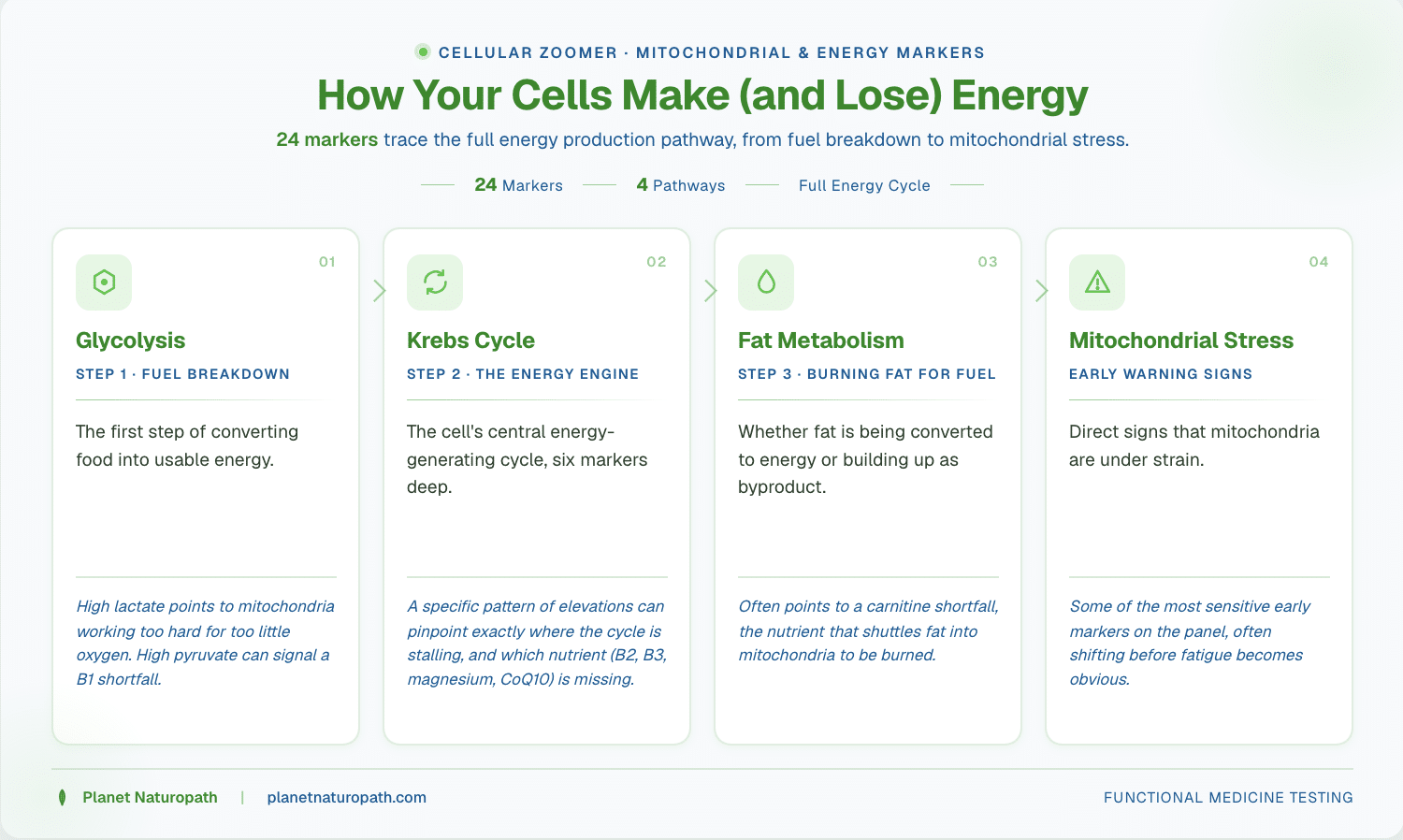
Mitochondrial and Energy Markers (24)
The OAT’s mitochondrial section is the most clinically informative part of the panel for anyone with fatigue or poor energy. It maps the full pathway of cellular energy production:
Glycolysis
Pyruvic acid and lactic acid. Elevated pyruvate suggests impaired conversion to acetyl-CoA (often from B1 deficiency); elevated lactate suggests mitochondrial dysfunction or poor oxygen delivery.
Krebs Cycle
Citric acid, cis-aconitic acid, alpha-ketoglutaric acid (2-oxoglutaric acid), succinic acid, fumaric acid, and malic acid.
These six organic acids map the complete Krebs cycle. A characteristic pattern of elevations can identify exactly where in the cycle function is impaired and which nutrient cofactors (B2, B3, magnesium, CoQ10) are limiting energy production.
Fat metabolism
Adipic acid, suberic acid, ethylmalonic acid, methylsuccinic acid, sebacic acid, 3-hydroxybutyric acid, and acetoacetic acid.
These markers assess fatty acid oxidation and ketone body metabolism, revealing whether fats are being efficiently converted to energy or accumulating as metabolic byproducts due to carnitine deficiency or mitochondrial dysfunction.
Mitochondrial function markers
3-hydroxyglutaric acid, 3-methylglutaconic acid, and 3-methylglutaric acid. These are direct indicators of mitochondrial stress and are particularly sensitive early markers of mitochondrial dysfunction.
Microbial Overgrowth Markers (18)
One of the most clinically valuable aspects of the OAT is its ability to detect microbial metabolites that reflect what’s happening in the gut without a stool test.

Yeast and fungal markers (9)
Citramalic acid, 5-hydroxymethyl-furoic acid, 3-oxoglutaric acid, furan-2,5-dicarboxylic acid, furancarbonylglycine, tartaric acid, arabinose, carboxycitric acid, and tricarballylic acid. Arabinose and tartaric acid are particularly well-established as Candida markers.
Elevated yeast metabolites correlate with brain fog, sugar cravings, fatigue, and gut symptoms.
Bacterial markers (4)
Hippuric acid, 2-hydroxyphenylacetic acid, 4-hydroxybenzoic acid, and 4-hydroxyhippuric acid. These reflect gut bacterial activity and dysbiosis patterns.
Clostridia and dysbiosis markers (5)
4-hydroxyphenylacetic acid, HPHPA, 4-cresol, indoleacetic acid. HPHPA (3-(3-hydroxyphenyl)-3-hydroxypropionic acid) is a marker of Clostridia overgrowth.
It’s linked to disrupted dopamine metabolism, which connects gut dysbiosis to neurological and psychiatric symptoms. This includes conditions like ADHD, autism spectrum presentations, and OCD.
Neurotransmitter and Stress Markers (16)
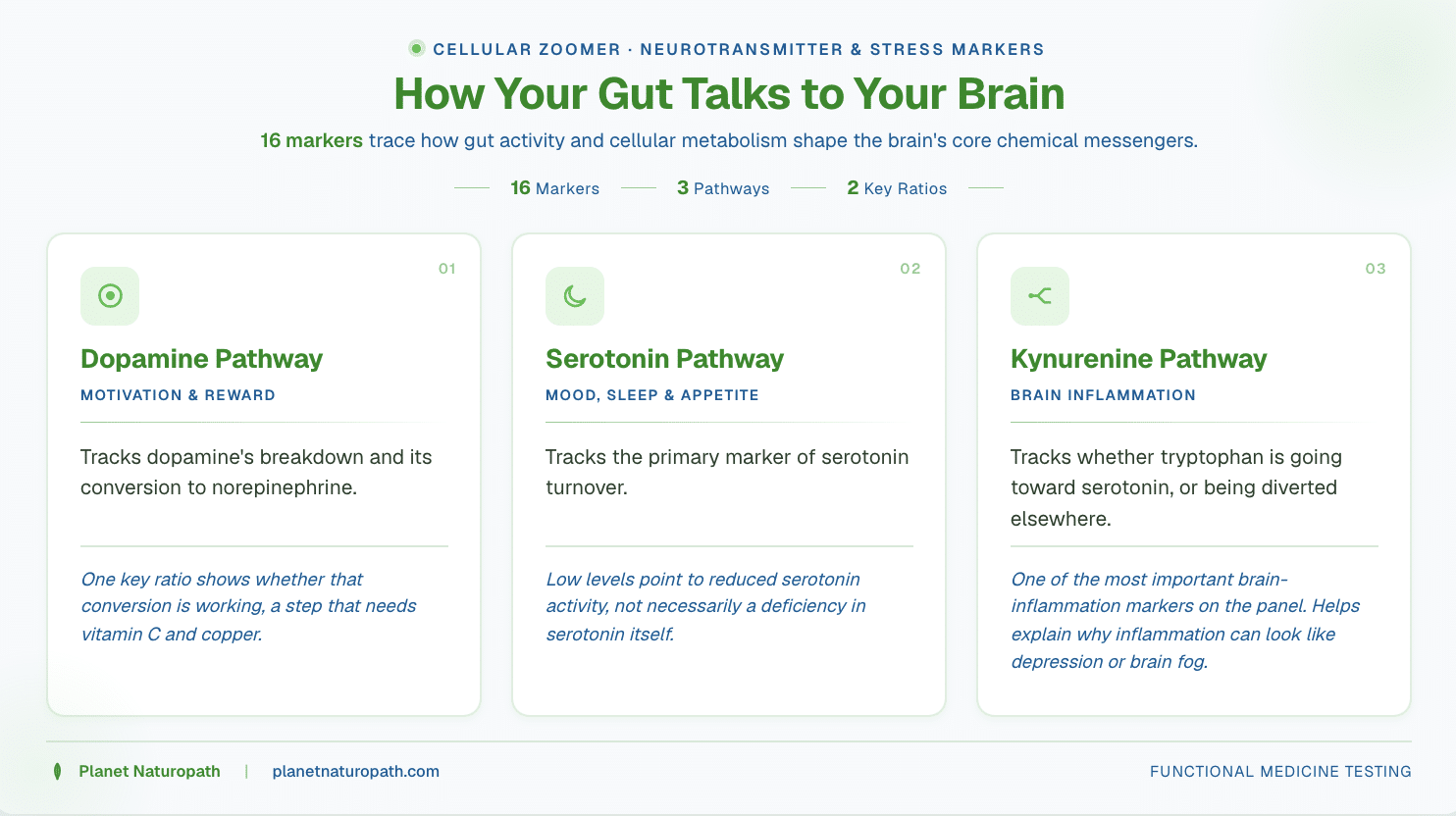
This section directly measures metabolites of the major neurotransmitter pathways in urine, revealing how gut microbial activity and cellular metabolism are affecting neurotransmitters.
Dopaminergic Pathway
DOPAC, HVA, VMA, and the HVA/VMA and HVA/DOPAC ratios. These ratios are clinically significant, an elevated HVA/VMA ratio can indicate impaired conversion of dopamine to norepinephrine (requiring vitamin C and copper as cofactors).
Serotonin Pathway
5-HIAA (the primary serotonin metabolite). Low 5-HIAA reflects low serotonin turnover, relevant to mood, sleep, and appetite regulation.
Kynurenine Pathway
Kynurenic acid and quinolinic acid, plus the quinolinic acid/5-HIAA ratio. This ratio is one of the most important neuroinflammation markers on the panel.
Elevated quinolinic acid is neurotoxic and is produced when tryptophan is shunted down the kynurenine pathway (often driven by inflammation or microbial activity) rather than toward serotonin.
This explains why neuroinflammation produces depression and cognitive symptoms.
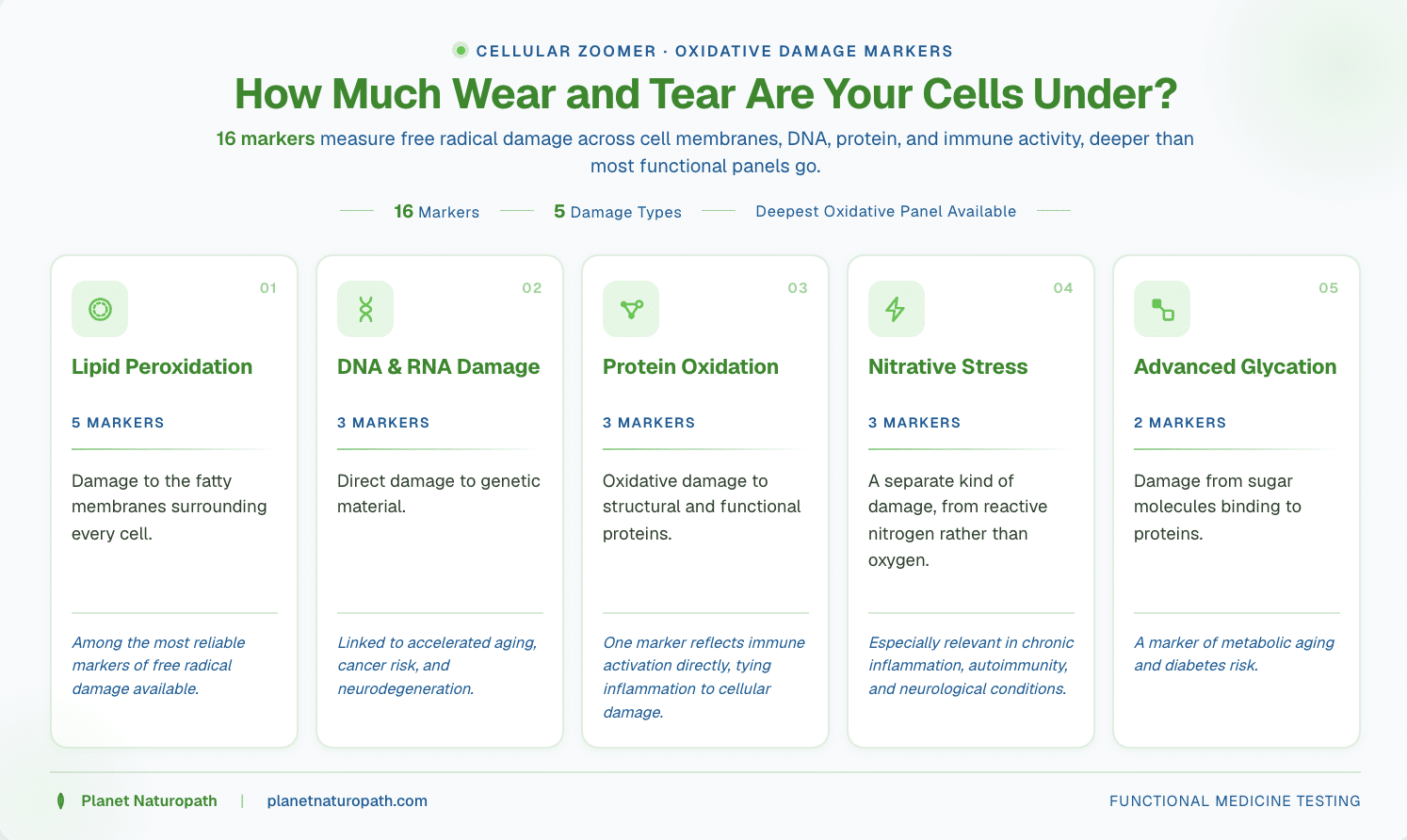
Oxidative Damage Markers of Vibrant Wellness Cellular Zoomer (16)
This is the Oxidative Stress Profile component, and it goes significantly deeper than what any other functional test offers for oxidative damage assessment.
Lipid peroxidation (5)
Malondialdehyde (MDA), glutathione-4-hydroxynonenal (GS-HNE), 8-iso-prostaglandin F2α, 11-β-prostaglandin F2α, and 15(R)-prostaglandin F2α. These isoprostanes are among the most reliable markers of free radical damage to cell membranes.
DNA and RNA damage (3)
8-OHdG (DNA damage), 8-hydroxyguanine, and 8-hydroxyguanosine. Elevated 8-OHdG reflects ongoing oxidative attack on DNA, and is associated with accelerated aging, cancer risk, and neurodegeneration.
Protein oxidation (3)
Dityrosine, 3-bromotyrosine, and 3-chlorotyrosine. Chlorotyrosine in particular reflects myeloperoxidase activity and neutrophil-driven oxidative stress, connecting immune activation to cellular damage.
Nitrative stress (3)
8-nitroguanosine, 8-nitroguanine, and nitrotyrosine. Nitrative stress markers reflect reactive nitrogen species (RNS) damage, a distinct pathway from ROS damage that is particularly relevant in chronic inflammation, autoimmunity, and neurological conditions.
Advanced glycation end products (2)
CML (Nε-carboxymethyllysine) and CEL (Nε-carboxyethyllysine). AGEs are formed when proteins react with sugars and are markers of metabolic aging, diabetes risk, and chronic inflammatory load.
Vitamin, Mineral, and Nutrient Status (9)
The OAT assesses functional nutrient status through the metabolic byproducts of nutrient-dependent pathways, a more accurate reflection of cellular utilization than serum levels. This is especially true for vitamin B12 and B2.
- Pyridoxic acid — functional B6 status
- Pantothenic acid — functional B5 status
- Ascorbic acid — functional vitamin C status
- Methylcitric acid — functional biotin status
- Methylmalonic acid — functional B12 status (more sensitive than serum B12 alone)
- Glutaric acid — functional B2 (riboflavin) status
- Phosphoric acid and glyceric acid — mineral metabolism markers
- 3-hydroxy-3-methylglutaric acid — CoQ10 pathway marker
Detoxification and Oxidative Stress (8)
- Pyroglutamic acid (glutathione pathway marker)
- 2-hydroxybutyric acid (oxidative stress and methylation marker)
- N-acetylcysteine acid (glutathione precursor utilization)
- Orotic acid (urea cycle and B12/folate function)
- Mandelic acid (solvent exposure and detox pathway marker)
Antioxidant Genetics (32 SNPs via saliva)
The saliva-based genetics component assesses 32 SNPs across the major antioxidant enzyme systems:
- Superoxide dismutases – SOD1, SOD2, SOD3 (first line of ROS defense)
- Catalase (CAT) – converts hydrogen peroxide to water
- Glutathione peroxidases – GPX1, GPX2, GPX4 (lipid peroxide defense)
- Glutathione-related enzymes – GSR, GSS, GSTM1, GSTM5, GSTP1
- Thioredoxin system – TXNRD1, TXNRD2, TrxR2
- Other antioxidant enzymes – HMOX1, CYBA, SELENOP, XDH, GLUL, CYB5R3, PRKAA2, CYP1A1, COX-2
This genetics panel is what makes the Cellular Zoomer uniquely actionable.
Knowing you have elevated oxidative damage markers is useful. But knowing you also carry SOD2 and GPX1 variants that impair your first-line ROS defense tells you exactly why your antioxidant capacity is inadequate. It also points to which specific enzymes and cofactors need targeted support.
Who Should Consider the Vibrant Wellness Cellular Zoomer?

This test is the right choice for anyone with:
- Chronic fatigue or low stamina that hasn’t responded to sleep improvement, diet changes, or other interventions
- Brain fog, poor concentration, or cognitive drag
- Mood variability, anxiety, or depression — particularly where gut-brain connections are suspected
- Sugar cravings, carbohydrate dependency, or metabolic instability
- Slow recovery after exercise, illness, or stress
- Known or suspected gut dysbiosis, Candida overgrowth, or SIBO
- Neurological symptoms where kynurenine pathway disruption is suspected
- Anyone wanting to understand their oxidative damage burden and antioxidant genetic capacity
- Athletes wanting to optimize recovery and mitochondrial function
- Anyone with a history of toxic exposure where cellular oxidative damage is a concern
- People who have previously done an OAT and want the added value of the oxidative stress component
The OAT as a Standalone Test

Organic Acids Test
Individual price: $450
If you’re specifically interested in the Organic Acids Test component, for example, for retesting after a treatment protocol focused on mitochondrial support or gut dysbiosis, the OAT is available as a standalone panel at $450. This makes targeted retesting cost-effective without needing to repeat the full Cellular Zoomer.
If you haven’t tested before, the full Cellular Zoomer is the better starting point, the oxidative damage and genetics data adds significant clinical value over the OAT alone.
How the Vibrant Wellness Cellular Zoomer Test Works
The Cellular Zoomer is an at-home collection:
- Urine sample – a single collection for the OAT and oxidative damage markers
- Saliva sample – for the antioxidant genetics component
Collection instructions are included in the kit. Once collected, return the samples using the prepaid FedEx shipping label. Schedule a pickup or drop off within 12 hours of urine collection.
Results are typically available within 2-4 weeks of the lab receiving your sample.
Understanding Your Results
The Cellular Zoomer report is detailed and gives a thorough analysis of each marker, especially any marker that is out of range.
However, this test is best viewed not as individual markers but looking at different patterns that show up on the test, how they connect to your genetics, and more importantly how they connect to the symptoms you are experiencing.
Some common clinical patterns:
Elevated Krebs cycle markers + low functional B vitamins – mitochondrial dysfunction driven by nutrient cofactor insufficiency. Targeted B vitamin repletion (in appropriate forms based on any MTHFR findings) is the priority.
Elevated Clostridia markers (HPHPA) + disrupted dopamine ratios – gut dysbiosis driving neurological symptoms via dopamine metabolism disruption. Addressing the Clostridia overgrowth often produces rapid improvement in mood, focus, and OCD-type symptoms.
Elevated quinolinic acid/5-HIAA ratio + low 5-HIAA – tryptophan being shunted away from serotonin toward the inflammatory kynurenine pathway. Anti-inflammatory and gut-focused interventions are more appropriate here than serotonin precursors alone.
Elevated isoprostanes and 8-OHdG + SOD2/GPX1 variants – high oxidative damage load combined with genetic vulnerability in antioxidant defense. Targeted antioxidant support (CoQ10, liposomal glutathione, selenium, vitamin E) prioritized to the specific enzyme deficits.
Elevated yeast markers + fatigue + sugar cravings – fungal dysbiosis driving energy instability. Often coexists with elevated oxalate markers (oxalic acid, glyceric acid) since Candida is a major oxalate producer.
A results consultation is strongly recommended, the Cellular Zoomer generates a lot of data and the treatment sequencing matters. Addressing oxidative stress before resolving microbial drivers, or supplementing B vitamins without addressing gut absorption, can lead to results that do not last.
Vibrant Wellness Cellular Zoomer Cost
The Cellular Zoomer is $695 USD when ordered individually through the Planet Naturopath portal. The standalone OAT is $450 for retesting purposes.
The 3 Zoomer bundle at $1,300 is excellent value for this test. Common combinations include Cellular Zoomer + Gut Zoomer + Nutrient Zoomer (a comprehensive cellular, gut, and nutritional picture) or Cellular Zoomer + Toxin Zoomer + Nutrient Zoomer (for anyone where toxic burden and cellular impact are the primary focus).
Tests That Work Well With the Vibrant Wellness Cellular Zoomer

Gut Zoomer
Individual price: $625
The Cellular Zoomer’s microbial markers give a metabolic snapshot of gut dysbiosis via urinary metabolites. The Gut Zoomer shows the full microbiome picture, which bacteria or pathogens are present, in what balance, and alongside the gut-brain neurotransmitter pathways. Running both together connects the microbial findings to their gut-level source.

Nutrient Zoomer
Individual price: $695
The Cellular Zoomer shows which nutrient-dependent pathways are underperforming; the Nutrient Zoomer shows whether the relevant nutrients are actually deficient at the cellular level and whether genetics explain the utilization problem. Together they separate dietary insufficiency from absorption or utilization bottlenecks.
Toxin Zoomer
Individual price: $795
Oxidative stress is one of the primary mechanisms by which environmental toxins cause cellular damage. Elevated oxidative damage markers on the Cellular Zoomer combined with toxic burden on the Toxin Zoomer confirms that the damage is exposure-driven, which completely changes the treatment approach compared to oxidative stress from metabolic or nutritional causes.

Hormone Zoomer
Individual price: $595
Hormonal patterns, particularly cortisol rhythm and sex hormone balance, directly influence mitochondrial function and oxidative stress. When the Cellular Zoomer shows cellular strain, the Hormone Zoomer clarifies whether it’s being driven or amplified by adrenal dysfunction or hormonal dysregulation.
How to Order Vibrant Wellness Cellular Zoomer
Order through the Planet Naturopath portal at planetnaturopath.wellproz.com. Your test kit ships directly from the Vibrant Wellness lab. Shipping is free within the US.
Given the complexity of this panel, a results consultation is particularly valuable. The Cellular Zoomer often provides the missing piece that explains why previous treatments haven’t fully worked — but acting on those findings in the right sequence is what produces real clinical progress.

Still not sure what Is driving your symptoms?
If you’ve been trying to fix this on your own but aren’t seeing results, it may be time to look deeper.
I offer personalised, one-on-one consultations to identify the root cause and create a plan tailored specifically to you.